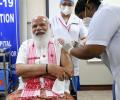
Covaxin was found to have 78 per cent efficacy against COVID-19 of any severity, 14 or more days after the second dose, and is extremely suitable for low- and middle-income countries due to easy storage requirements, said the global health body.

Bharat Biotech's Covaxin has demonstrated 77.8 per cent effectiveness against symptomatic COVID-19 and 65.2 per cent protection against the new Delta variant.

While Bharat Biotech's Covaxin is in trials among children already, Serum Institute of India will begin Novavax vaccine trials on children from July, whereas the Pfizer vaccine has been approved for adolescents in the United States; and Cadila Healthcare's ZyCoV-D has done trials on 12 year-olds and above already, reports Sohini Das.
The Indian vaccine industry largely feels there are two ways in which vaccine innovation can be spurred - one, get a high price for the product and two, have the government buy a few hundred million doses of the product at a certain price.
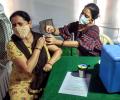
So far, no other vaccine has been approved globally for children below 12 years. Sohini Das reports.
Several private hospitals across the country said they have no clarity on procuring COVID-19 vaccines under the new policy announced by Prime Minister Narendra Modi and that it has led to the vaccination being put on hold at their centres.

As the Omicron variant of Sars-CoV-2 takes centrestage, vaccine makers in India are of the view that scaling up the existing vaccines to make them more effective is possible.

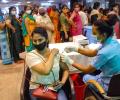
Easing restrictions, all private hospitals were on Tuesday allowed to give the vaccines if they adhere to the laid down norms, while the 9 am to 5 pm timing was also done away with.
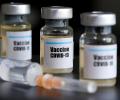
Government institutions and pharma industry are examining if a 'cocktail' approach to making a multi-variant Covid-19 vaccine works against multiple strains of the ever-mutating virus, reports Sohini Das.

Only half India's population has received the first shot of Covishield and Covaxin and the government's immediate task is to first vaccinate its adult population before placing its focus on children.
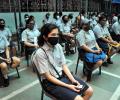
With the US education system operating independently from the government, universities are adopting varying strategies when it comes to Covid vaccination.

India has purchased 500 million doses of the Oxford University-AstraZeneca vaccine candidate, one billion from the United States company Novavax and 100 million doses of the Sputnik V candidate from Russia's Gamaleya Research Institute, according to the US-based Duke University Global Health Innovation Center.
The procurement and distribution will be centralised though the government is yet to take a call on the initial number of doses that will be procured.

The Oxford vaccine, which also has a tie-up with the Serum Institute of India, was first administered to Brian Pinker, an 82-year-old Oxford-born dialysis patient. Pinker is among the first to be vaccinated by the Oxford University Hospital's (OUH) chief nurse, hailed as a major milestone in the phased vaccination programme being undertaken by the National Health Service (NHS).

The government is considering setting up air freight stations to enable direct movement of vaccines from pharmaceutical factories to the aircraft.

The vaccine candidate, ZyCoV-D, showed a "strong immune response" in animal studies, and the antibodies produced were able to completely neutralise the wild type virus, Zydus said. The 12 institutes have been asked by the ICMR to fast track clinical trials of the vaccine as it is being considered as one of the top priority projects which are being monitored at the topmost level of the government.

The first COVID-19 vaccine shots in India were given on Saturday to nearly two lakh frontline healthcare and sanitary workers as Prime Minister Narendra Modi rolled out the world's largest inoculation drive against the pandemic that has caused 1,52,093 deaths and upended millions of lives in the country.

Vinod Kumar, Tata Communication CEO has amazing business strategies to enhance topline.
 © 2026 Rediff.com - Advertise with us - Disclaimer - Privacy Policy - Sitemap - Feedback - About us - Terms of use - Grievances